Power Optimization of a Continuous Glucose Monitoring (CGM) System
August 2024 – May 2025
Problem
CGM battery life lasted approximatley 3 hours. This is not sufficient for individuals who must monitor their glucose levels at various points throughout the day without re-charging the battery every few hours.
Solution
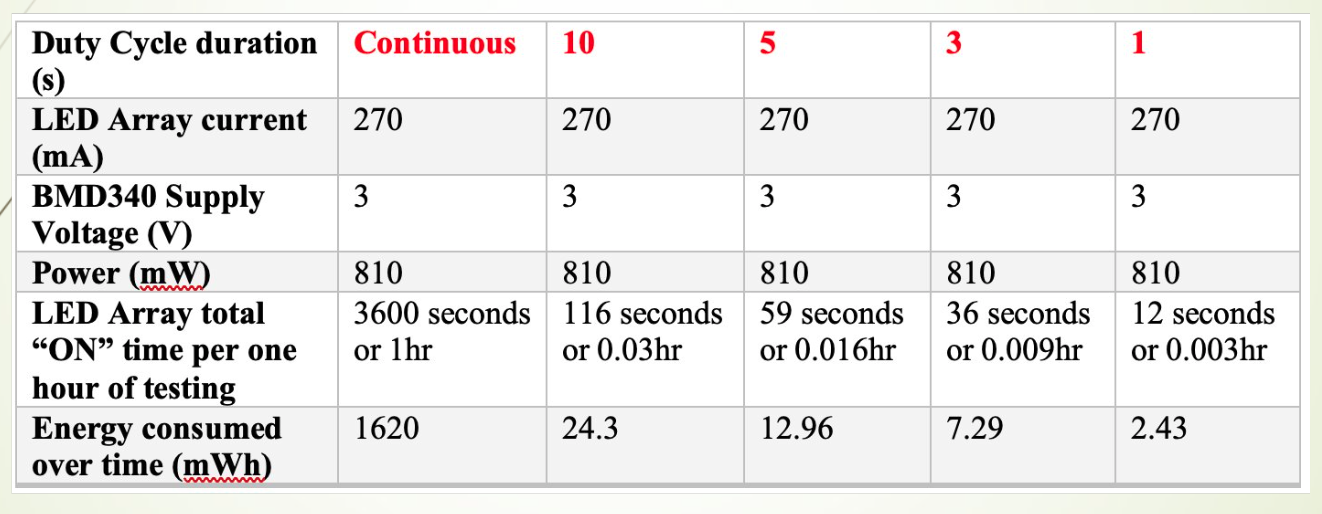
Power the implantable glucose sensor on a lower duty cycle to reduce power consumption and extend the life of the system. However, switching of the subcutaneous electrochemical sensor can affect sensor signal output without a proper stabilization period. To meet specifications, the signal output had to be within a 5% margin of error.
Contributions
- Formulated various pulse width modulation (PWM) algorithms in C++ to test operatation of the system at various lower duty cycles.
- Formulated a C++ algorithm to extract necessary parameters to process sensor output.
- Built a custom breakout PCB to enable repeatable hardware-software integration testing.
- Created a multi-modal data acquistion system to acquire raw sensor data, process and vizualise preformance in real time.
- Designed and executed verification tests to ensure both device and measurement system consistancy.
Outcome
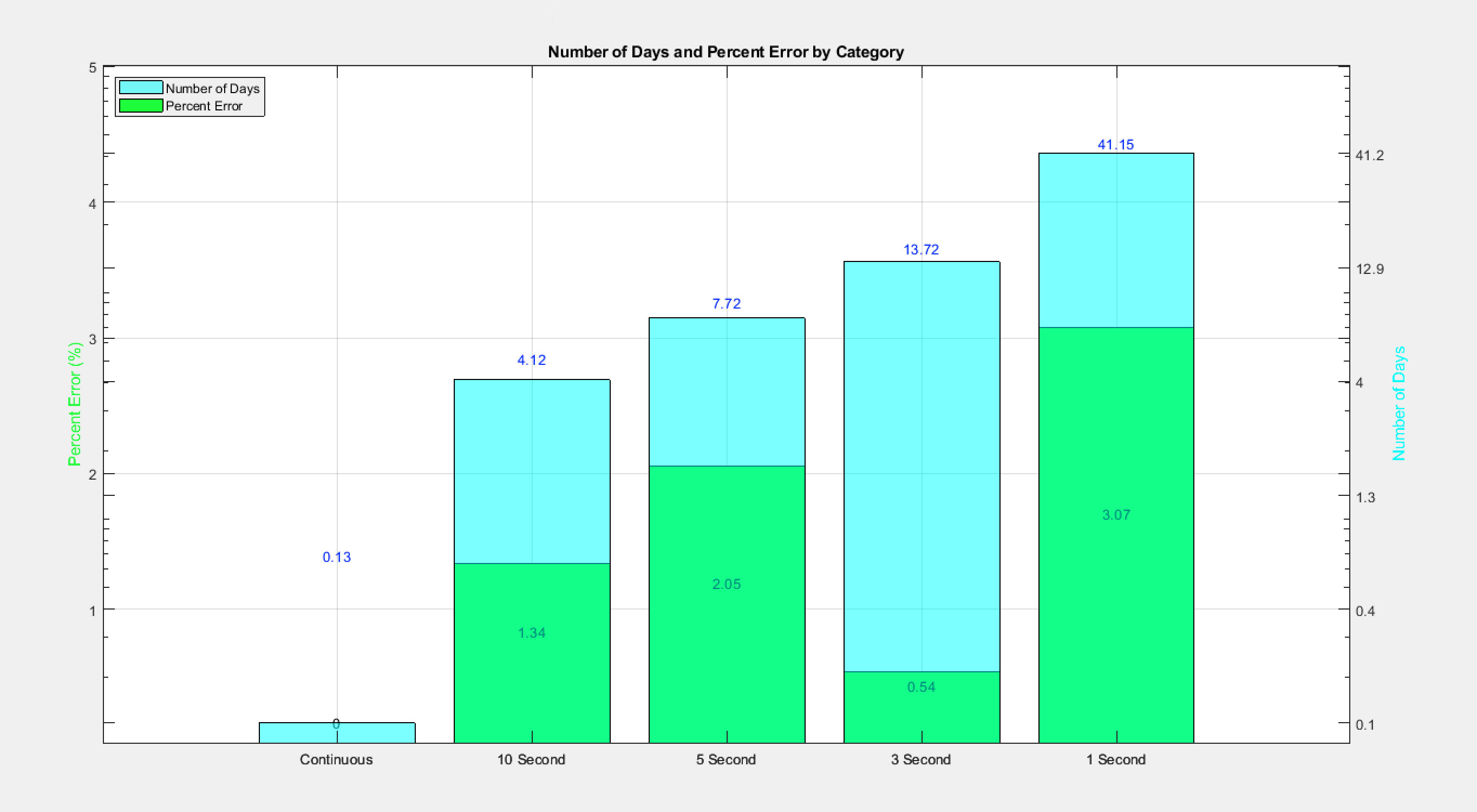
While all duty cycle variations were under the 5% margin of error, lower duty cycles led to higher error most likely due to insufficient time for the sensor to stabilize. Lower duty cycles extended battery on average 75%, while higher duty cycles extended battery life around 15%.
Figures